Problem:
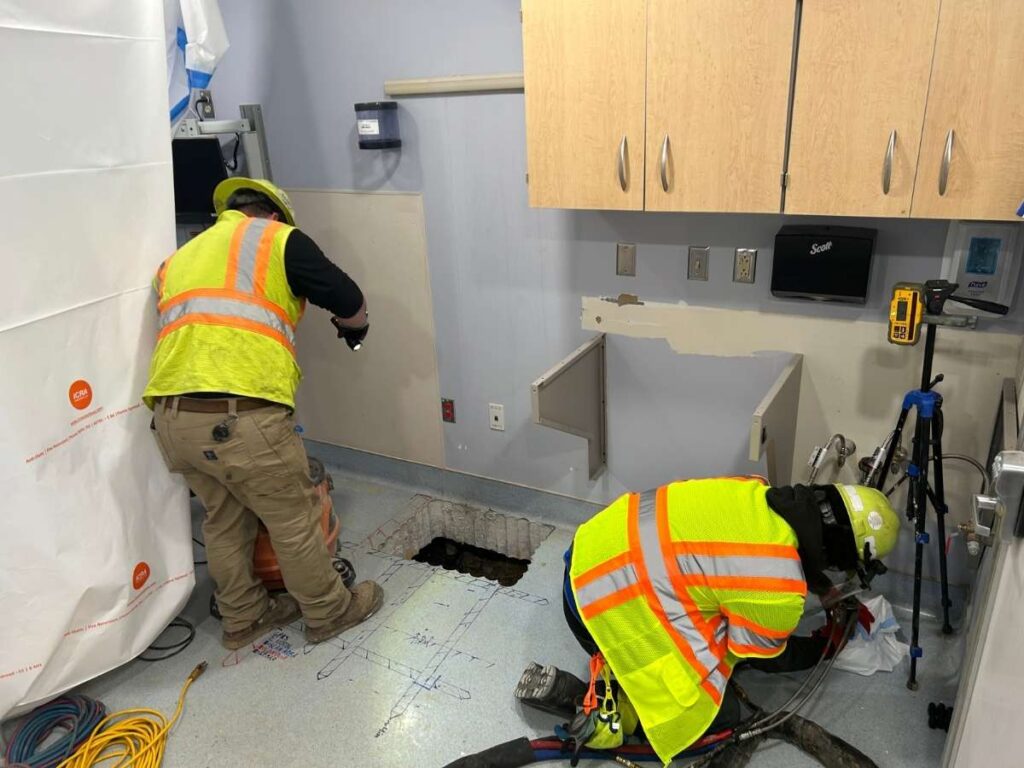
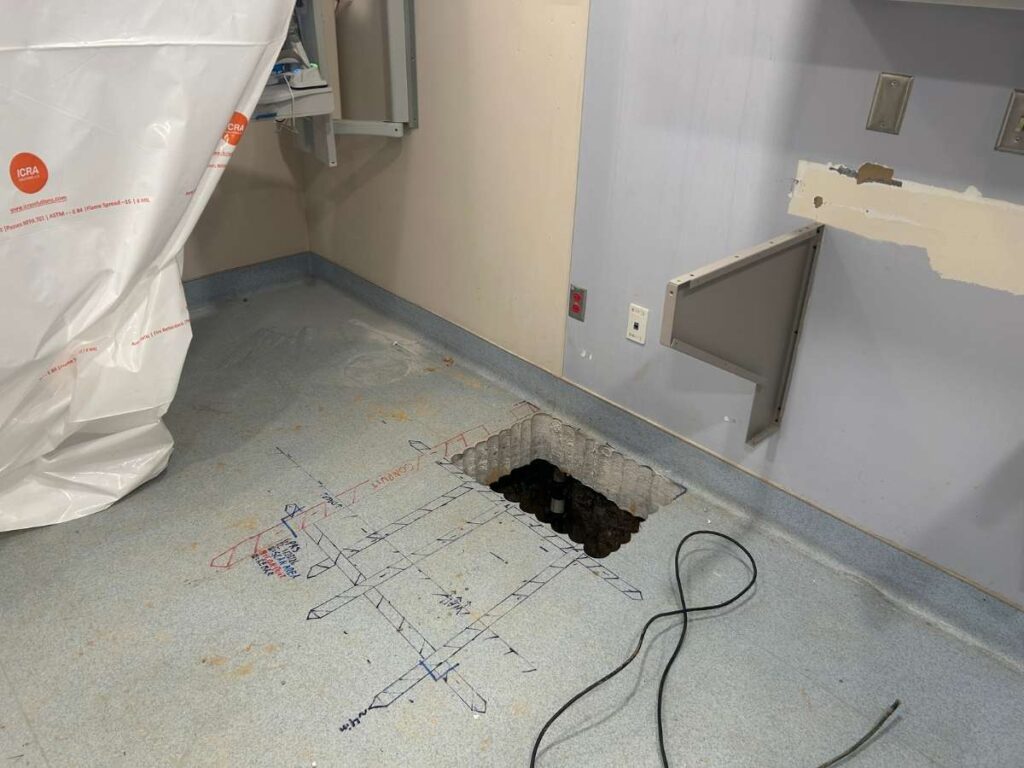
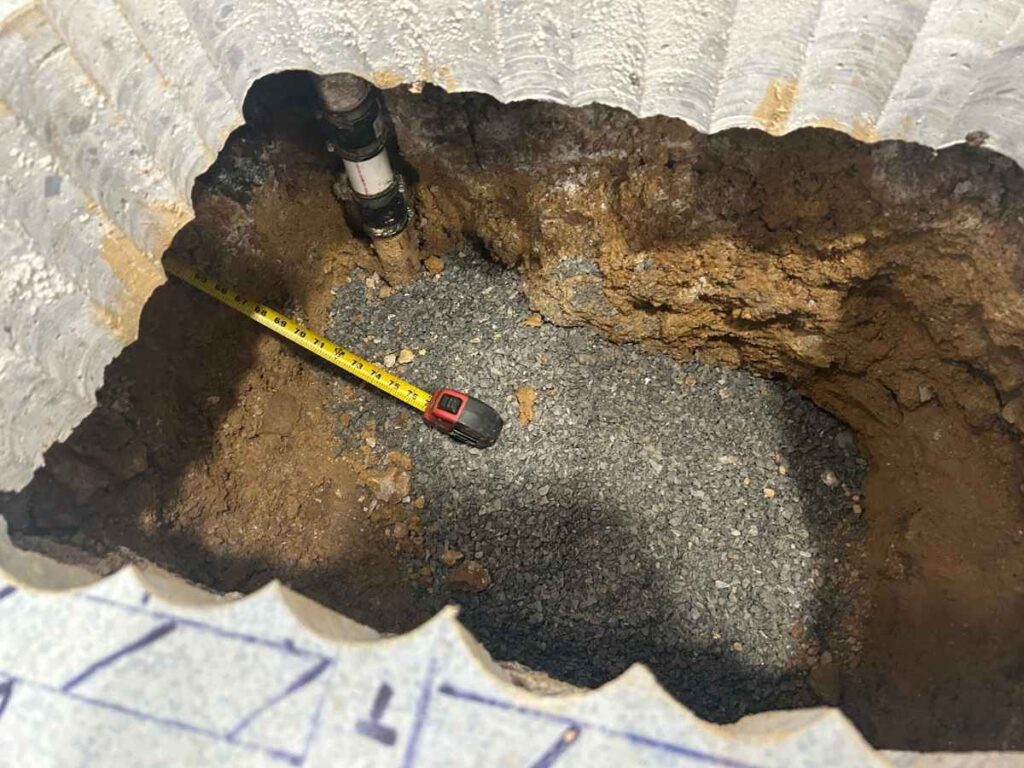
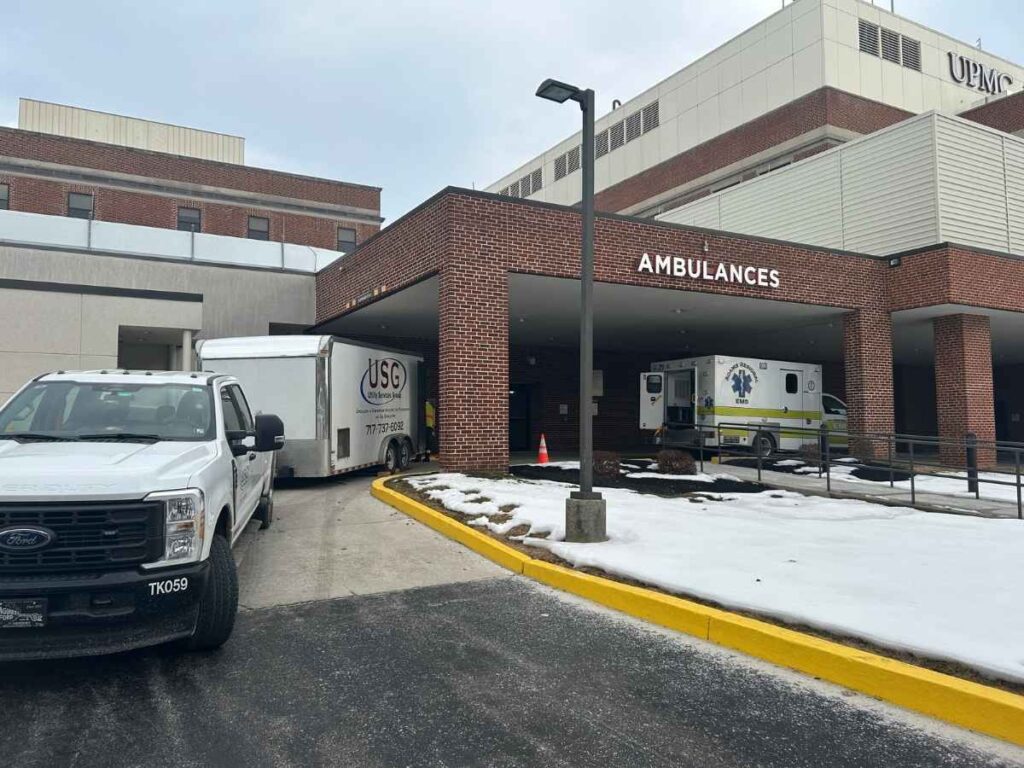
Emergency rooms are vastly important for communities, offering help to those who need immediate care. They exist to handle urgent situations, but when a hospital in Pennsylvania faced an emergency of its own, USG was there to answer the call. It was discovered by a subcontractor hired by the hospital maintenance team that beneath the ER, a sewer line had been leaking. This wasn’t a small leak either, in fact, the leak appeared to have been occurring for years, washing away support soils beneath the hospital floor. The void discovered from the leak was massive: 12 feet long, 2 feet wide, and varying between 1 and 3 feet in depth. After sewer line repair, the hospital urgently needed a solution that would reestablish connectivity between the support slab and underlying soils without interrupting daily operations.
Solution:
Because the floor had already been removed for the sewer repair, USG was able to take advantage of direct access to the underlying void, eliminating the need for additional drilling. Polyurethane was injected beneath the slab through the existing opening, allowing the material to reach the irregularly shaped void with precision.
As the product expanded, it conformed to the contours of the space, filling gaps and displacing loose material. This process restored contact between the slab and the supporting soils below, reestablishing the structural support needed for the floor.
Results:
Polyurethane injection restored support beneath the previously unsupported floor slab in under three hours, stabilizing the area quickly and effectively. All work was completed while the hospital remained fully operational, eliminating the need for downtime in a critical care environment.
Once injections were complete, the area was immediately ready for repair, allowing new concrete to be placed and the floor to be returned to service. This project demonstrates how polyurethane can deliver rapid, reliable results while minimizing disruption in sensitive, high-traffic facilities.