Problem:
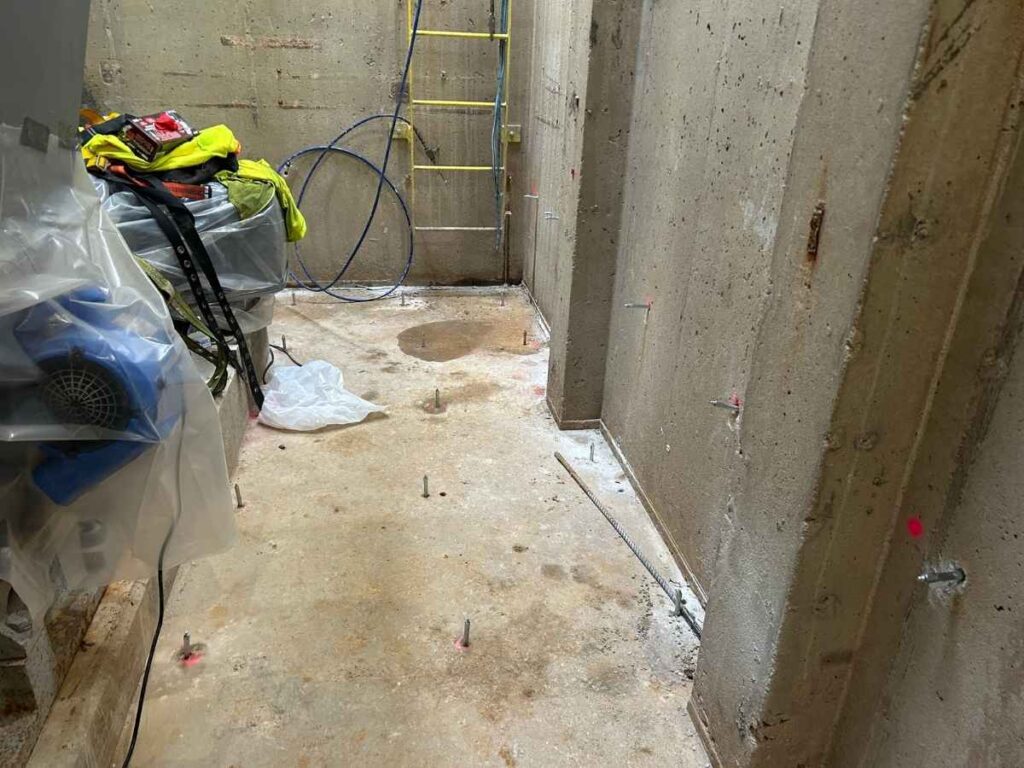
At an industrial facility in Hanover, Pennsylvania, facility owners aimed to restore a below grade pit for operational use. Although the structure had remained largely intact despite years of inactivity, ongoing water infiltration presented a significant obstacle. Moisture within the structure prevented the application of a required epoxy lining system, delaying the next phase of rehabilitation. Additionally, this pit had 18 ft by 12 ft equipment placed in the middle of the pit, further challenging installation. To address this issue and prepare the structure for lining, the owners contacted USG for a solution.
Solution:
USG Inc. developed a targeted approach to address water infiltration using single component polyurethane injections to form a grout curtain wall. During the planning phase, USG collaborated with NCFI Geotechnical Polyurethanes to help evaluate site conditions and refine the injection strategy.
Before beginning injections, the team performed field testing to identify soil conditions and determine how high water was entering along the walls. They identified silty, clay soils and an approximate height for the groundwater level. This information allowed the crew to properly design the grout curtain and ensure full coverage of the affected areas.
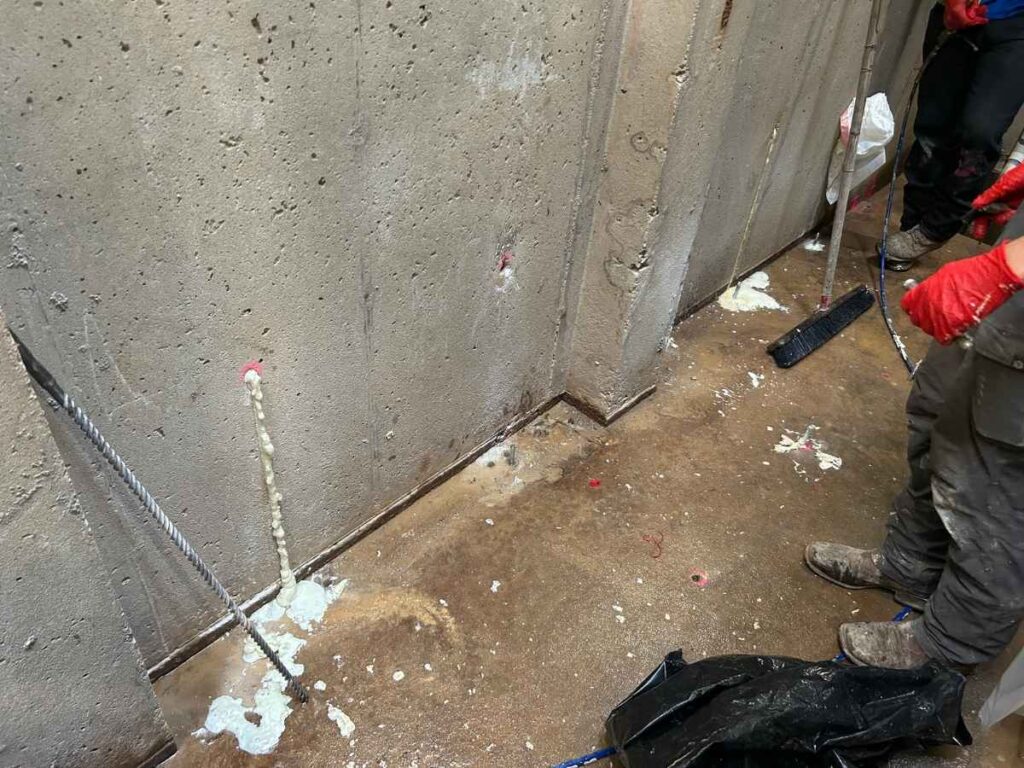
With the injection plan established, the crew began preparing the structure for treatment. Special care was taken to protect the surrounding environment: equipment was covered and vacuum systems were used during drilling to prevent dust from spreading throughout the pit. Next, 120 injection ports were installed by drilling through the 8″ thick walls and 25″ thick concrete floor in a 2-foot diamond pattern. This layout was strategically selected to ensure the polyurethane would spread evenly and form a continuous grout curtain, effectively sealing the structure against water intrusion.
Results:
Through collaboration with NCFI Geotechnical and thorough planning by the USG team, the project was completed efficiently within a single week. Active water infiltration through the walls and floor was successfully mitigated, creating the dry conditions required for the next phase of work.
With moisture eliminated, the contractors responsible for epoxy lining were able to proceed with the application without delay. The combination of polyurethane sealing and epoxy lining provided a long-term solution against future water intrusion, allowing the industrial facility to safely return the structure to active use.